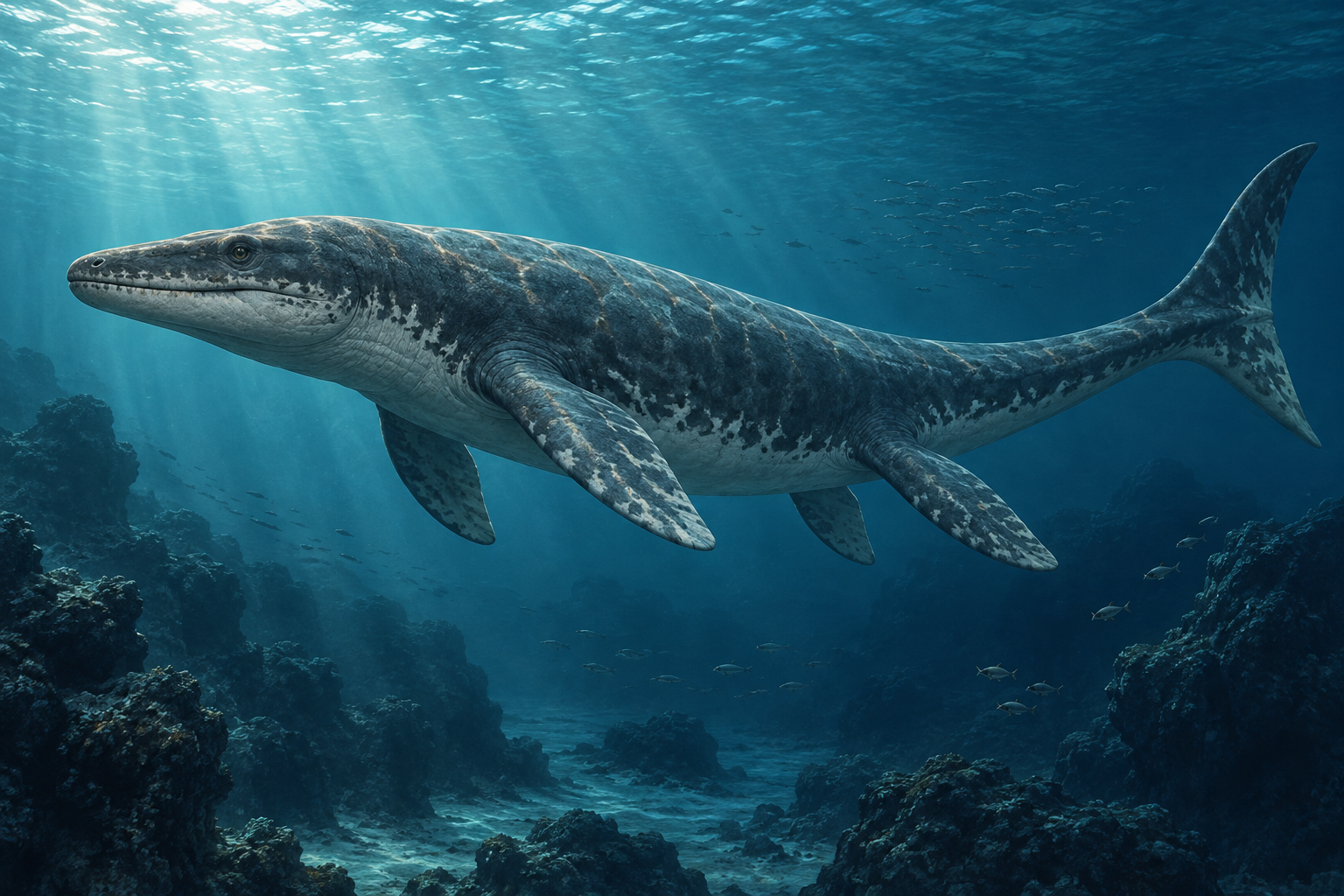
Late Cretaceous · Marine reptile
Mosasaurus
A powerful marine lizard with paddle-like limbs and a muscular tail. Mosasaurus belonged to a lineage of reptiles that returned to the sea, rather than to the dinosaurs.
Explore profile →Meet the marine reptiles and remarkable fish that inhabited prehistoric seas. Follow their stories through deep time and the fossils they left behind.
A powerful marine lizard with paddle-like limbs and a muscular tail. Mosasaurus belonged to a lineage of reptiles that returned to the sea, rather than to the dinosaurs.
Explore profile →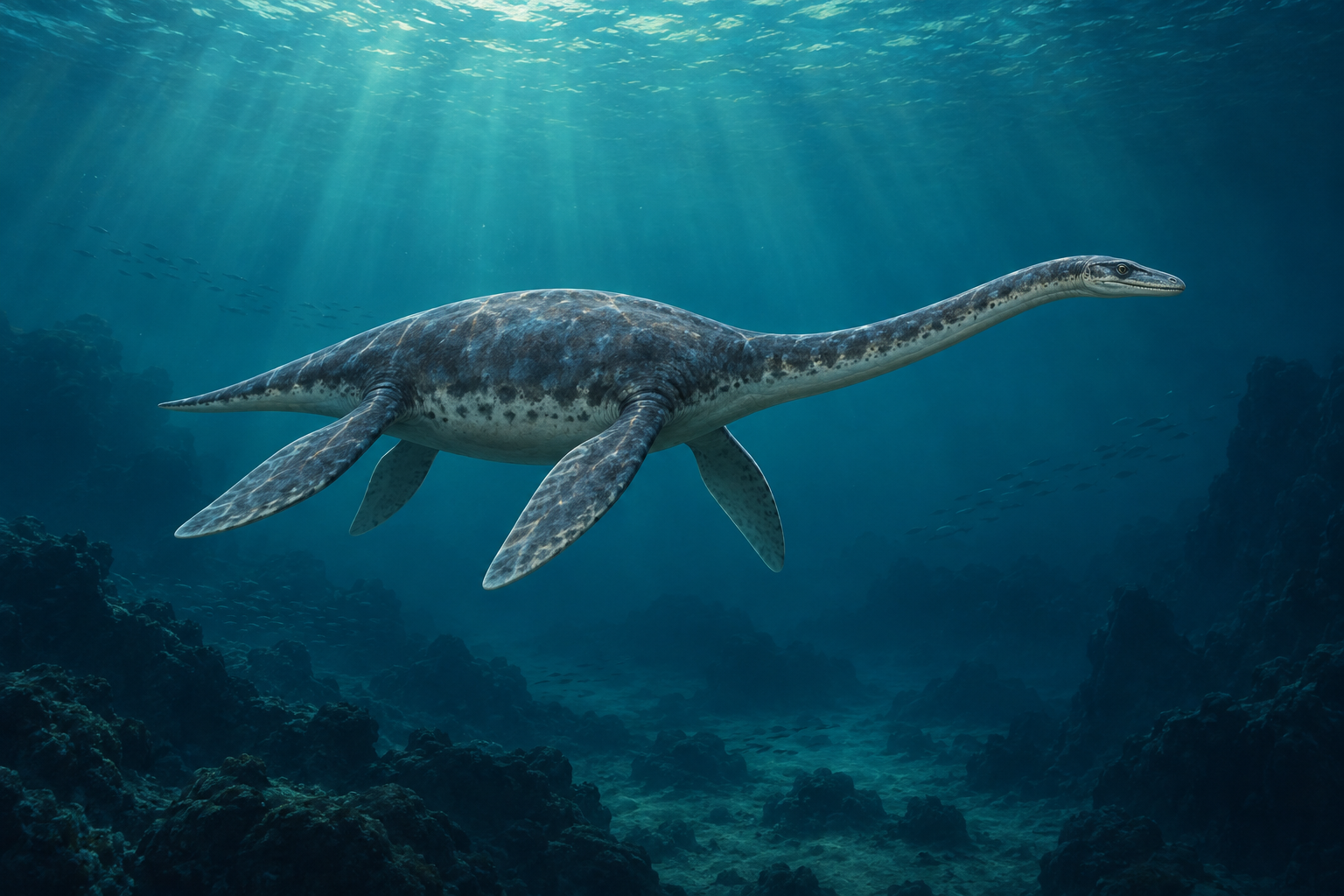
A small-headed, long-necked marine reptile propelled by four flippers. This earlier Jurassic animal introduces the broader plesiosaur lineage, not a Cretaceous resident.
Explore profile →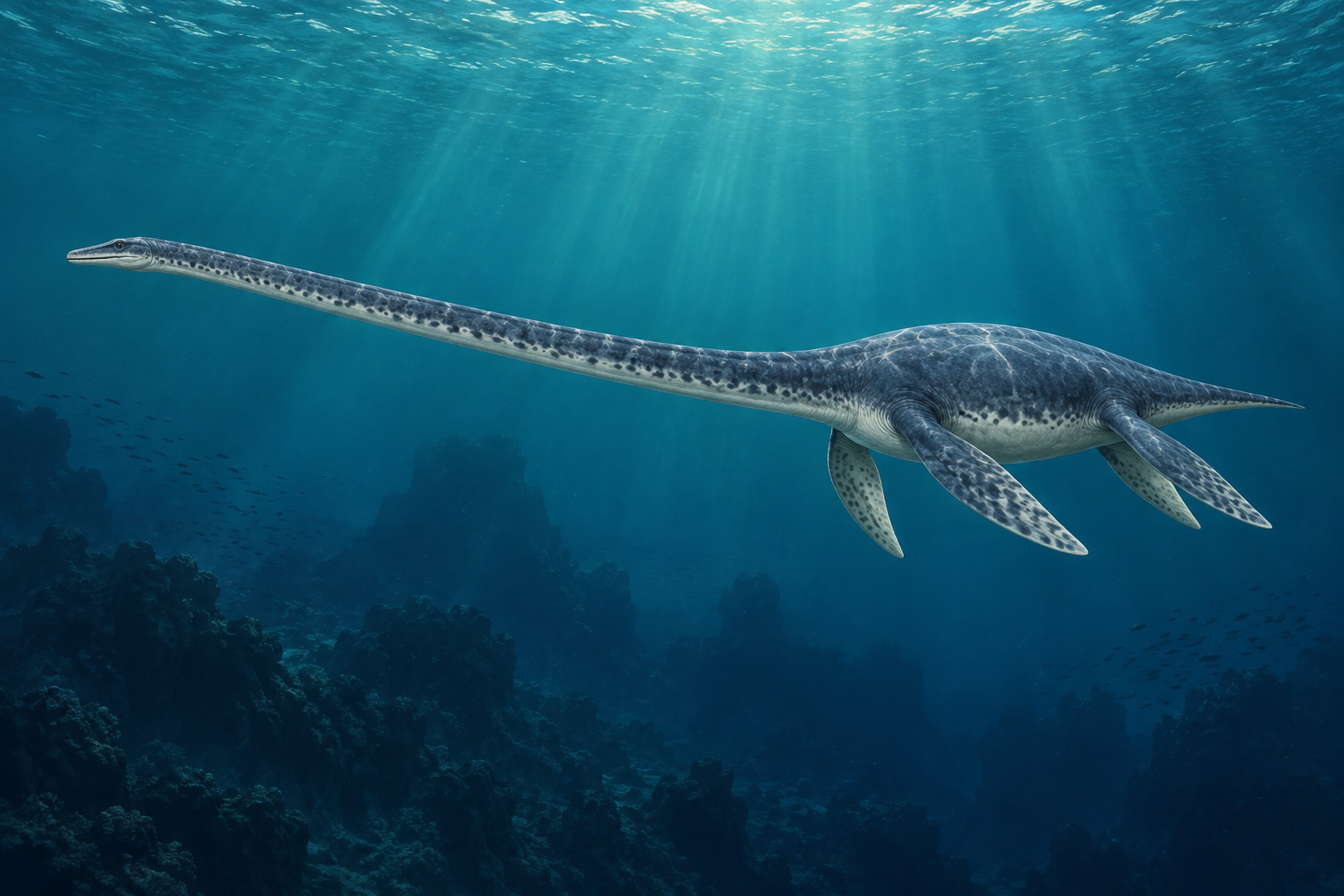
An exceptionally long-necked plesiosaur from the sea that once covered central North America. Its four large flippers powered underwater movement.
Explore profile →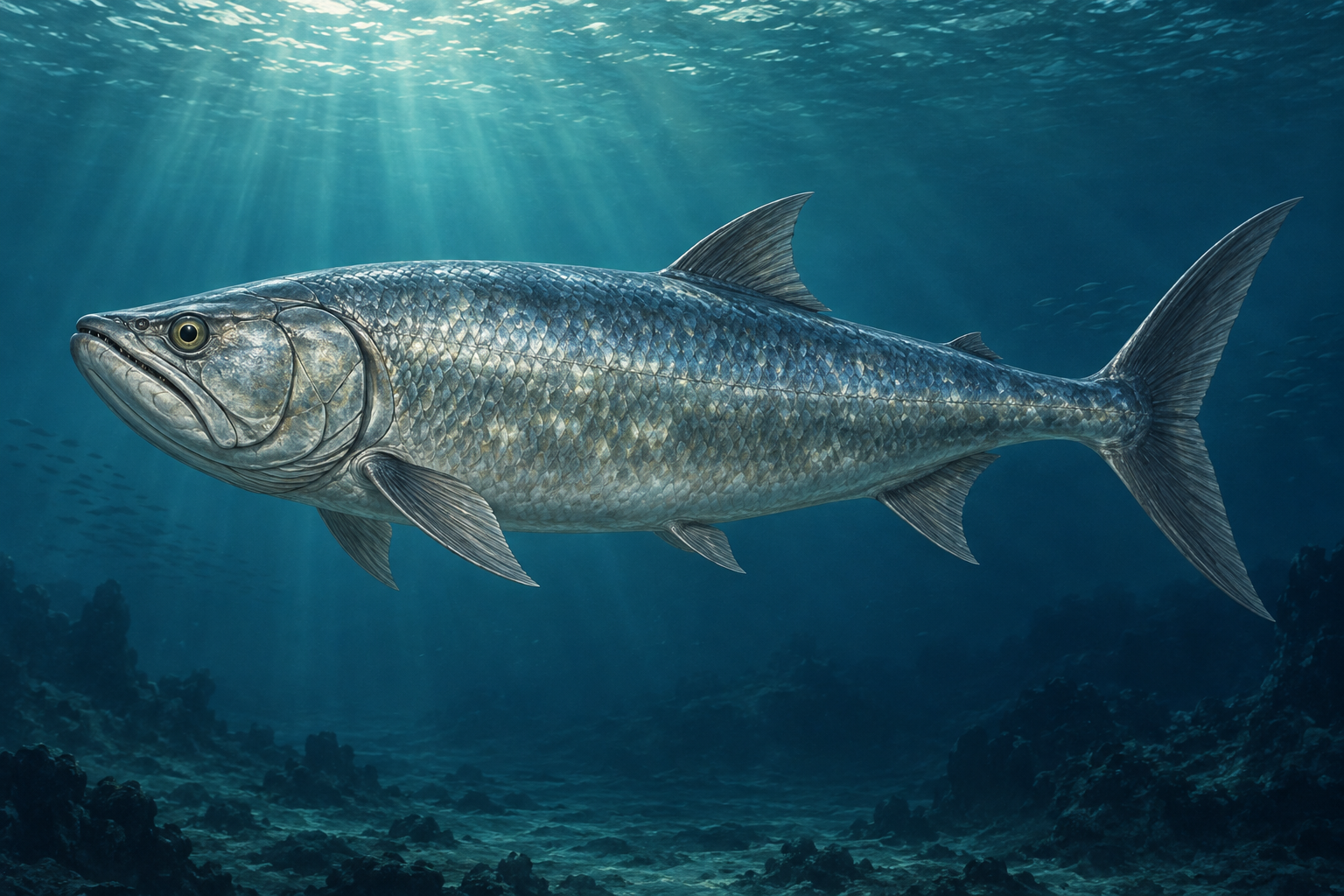
A large predatory bony fish with prominent teeth. Xiphactinus shared Cretaceous seas with marine reptiles but belonged to a very different branch of the vertebrate family tree.
Explore profile →Not every prehistoric giant was a dinosaur. Marine reptiles and fish had their own evolutionary histories. Plesiosaurus is included here as a Jurassic comparison.
Mosasaurus and plesiosaurs were air-breathing reptiles. Xiphactinus was a bony fish. Sharing an ocean does not make these animals close relatives.
Marine fossils in the Great Plains record the Western Interior Seaway. Landscapes that are dry today once held ocean ecosystems.
Explore the fossil record ↗Skeletons reveal body structure. Colour and behaviour are harder to recover. Each illustration is a starting point for exploring the evidence.
Follow a fossil’s journey →